What Is Textile Apparel in Wholesale?
A buyer reviewing a stocklot, a customs agent checking product codes, and a reseller building a category page may all use the same term differently. That is why the question what is textile apparel matters more than it seems. In wholesale trade, the definition affects sourcing, classification, pricing, shipping, and how fast goods can move from supplier to sales channel.
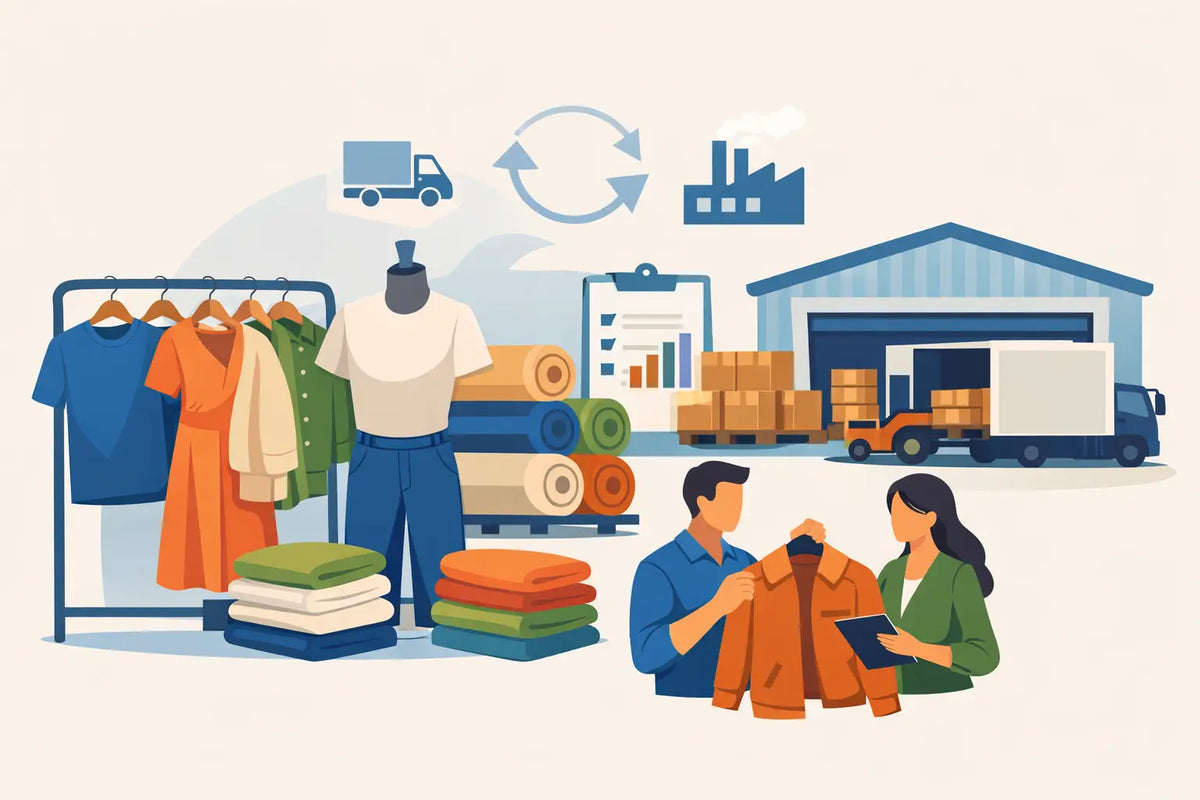
Textile apparel generally means clothing made from textile materials. That includes garments produced from woven, knitted, or nonwoven fabrics such as cotton, polyester, viscose, wool, denim, jersey, fleece, and blends. In plain business terms, if the product is wearable and made from fabric, it usually falls under textile apparel. T-shirts, jeans, jackets, dresses, sweaters, leggings, shirts, skirts, and many children's garments all fit the category.
The term sounds broad because it is broad. In day-to-day wholesale operations, buyers often use it as a working umbrella for apparel made of fabric, especially when discussing mixed branded stock, surplus collections, or export lots. But the exact scope can shift depending on the sales channel, customs classification, supplier documentation, and whether accessories or footwear are included in the same commercial conversation.
What is textile apparel, exactly?
The simplest answer is this: textile apparel is clothing made from textile-based materials rather than from leather, rubber, or hard components. If a garment's primary structure comes from fabric, it belongs in textile apparel.
That definition covers a wide range of categories. Basic fashion items like tees and sweatshirts qualify, but so do more structured garments such as blazers, coats, uniforms, sleepwear, and activewear. Textile apparel can be made for men, women, kids, or babies. It can be branded, unbranded, current season, off-season, overstock, or part of a sample collection.
For trade buyers, this matters because textile apparel is not just a style category. It is also a stock category. It helps separate fabric-based goods from shoes, bags, belts, and other non-apparel or mixed-material products when evaluating a lot.
How textile apparel differs from fashion, garments, and accessories
In retail language, people often mix up fashion, clothing, garments, and apparel. In wholesale, the distinctions are more useful.
Apparel is the broad commercial term for wearable products. Garments usually refers to individual clothing items. Textile apparel narrows that down to clothing made from fabric. Fashion is even broader because it includes styling, trend direction, seasonal positioning, and often non-clothing products such as handbags or footwear.
Accessories are where confusion starts. A textile scarf or fabric hat may be grouped with textile products, but many wholesalers still separate accessories from core apparel because margins, pack structures, and sell-through patterns are different. The same goes for footwear. Shoes may sit next to apparel in a B2B stock platform, but they are not typically described as textile apparel unless a very specific textile upper or product classification is being discussed.
That is why buyers should always check how a supplier defines a category inside a stock offer. One seller may present textile apparel as all wearable fabric goods. Another may limit it to core clothing only.
What products fall under textile apparel in wholesale
In practical sourcing terms, textile apparel usually includes tops, bottoms, dresses, outerwear, underwear, loungewear, sportswear, knitwear, and children's clothing. It may also include uniforms, workwear, and promotional clothing, depending on the supplier.
In branded surplus and off-price channels, the category can be especially mixed. A single lot may contain women's dresses, men's polos, kids' denim, and seasonal knitwear from several labels. That still counts as textile apparel because the commercial logic is based on fabric-made clothing stock.
There are edge cases. A jacket with textile body panels and leather sleeves may still be sold inside an apparel lot. A garment with heavy embellishment is still apparel. But when the material composition or product function moves too far from clothing, classification becomes less straightforward.
This is one reason experienced buyers ask for packing lists, size breakdowns, and material information before committing to volume. A lot described as textile apparel may be commercially sound, but its exact composition determines whether it fits the buyer's market.
Why the definition matters for buyers and resellers
For an end consumer, the term may sound technical. For a wholesale buyer, it has direct business impact.
First, it affects product sourcing. If you run an outlet, discount store, marketplace operation, or export business, you need to know whether a supplier's textile apparel stock means basics, fashion assortments, seasonal goods, or mixed branded clothing. The label alone is not enough.
Second, it affects import and export handling. Textile-based garments may follow different documentation and tariff logic than shoes or leather goods. Even within apparel, fiber content and product category can influence customs treatment. This is especially relevant for buyers moving goods across borders or outside the EU.
Third, it affects merchandising and turnover. Textile apparel is not one speed category. Branded cotton T-shirts may sell quickly year-round. Fashion dresses may move faster but carry greater trend risk. Heavy winter outerwear can offer strong margins, but timing matters. The term tells you the stock family, not the sales velocity.
Fourth, it affects margin planning. Mixed textile apparel lots often offer buying opportunities because they include leftover stock, canceled orders, sample collections, or excess inventory from known brands. But margin depends on brand mix, condition, seasonality, labeling, and how much sorting is needed after arrival.
What is textile apparel in the stocklot business?
In the stocklot business, textile apparel usually refers to surplus clothing inventory available for secondary distribution. That can include overproduction, past-season goods, unsold retail stock, showroom samples, or canceled wholesale orders.
This is where the category becomes commercially useful. Buyers are not just purchasing "fashion." They are purchasing units, assortments, and resale potential. Textile apparel is a workable umbrella for moving bulk fabric-based clothing through off-price, export, outlet, and online resale channels.
The value of the stock depends on several factors: brand recognition, quantity, category balance, condition, original packaging, labeling status, and market compatibility. A mixed branded apparel lot can be highly attractive if the goods are authentic, commercially wearable, and priced for turnover. But the same category can underperform if the size curve is poor or if the mix is too fragmented for the target market.
That is why a professional buyer looks past the category name and into the stock structure.
Common misunderstandings around textile apparel
One common mistake is assuming textile apparel means low-end basics. It does not. The category includes premium branded garments, tailored pieces, licensed collections, and fashion-led products. The term describes material and product type, not quality level.
Another mistake is assuming all textile apparel is easy to resell. It depends. White-label basics can move well in one market and stall in another. Recognizable brands may support stronger sell-through, but only if sizing, season, and local demand line up.
A third misunderstanding is treating textile apparel as identical to all soft goods. Many buyers use soft goods as a broad internal label, but commercially there is still a difference between apparel, home textiles, and accessories. Bed linen is textile, but it is not apparel. A fabric backpack may be textile-based, but it is not apparel either.
How buyers should evaluate textile apparel offers
When reviewing a textile apparel offer, start with the resale logic rather than the wording. Ask what types of garments are included, whether the lot is mixed or category-specific, and how the sizes are distributed. Check brand mix, gender split, seasonality, labeling, and whether the goods are packed by piece, set, or assorted bundle.
It also helps to understand whether the supplier works in bulk lots, smaller packages, or both. Larger distributors may want pallet or container quantities. Smaller buyers, including private entrepreneurs with a B2B account, may prefer smaller branded packages or even individual pieces to test a sales channel before scaling.
A platform such as Stock IT B2B fits this type of buyer behavior because textile apparel is not one fixed buying model. Some customers need volume for export. Others need selective branded units for online resale, boutique replenishment, or outlet testing. The category stays the same, but the buying strategy changes.
The commercial value behind the term
Textile apparel is a simple term with a lot of trade weight behind it. It tells buyers they are looking at clothing made from textile materials, but it also signals a product universe that can be sourced, sorted, priced, exported, and resold in many different ways.
For professional buyers, the real question is not only what is textile apparel. It is whether the stock is right for your market, your margin target, and your turnover speed. Once that part is clear, the category stops being a label and starts being inventory.