What Is Textile Trade in Real Terms?
A buyer in apparel does not make money from definitions. They make money from movement - the right goods, at the right price, in the right market, with the right paperwork. Still, understanding what is textile trade matters because it explains how products move from factory or brand owner to wholesalers, distributors, retailers, exporters, and resale channels.
What is textile trade?
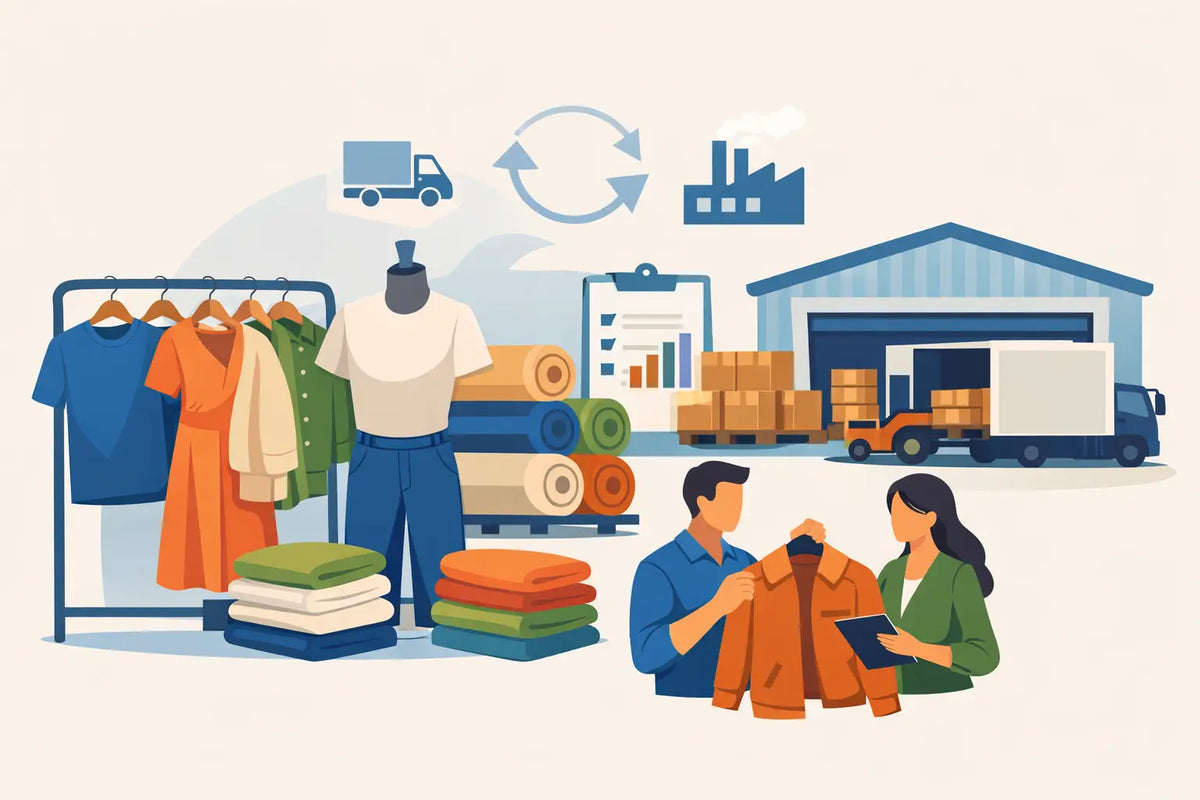
In simple terms, textile trade is the commercial buying and selling of textile-related goods across local, national, and international markets. That includes raw fibers, yarns, fabrics, finished apparel, home textiles, footwear-related soft goods, and fashion accessories, depending on the supplier category.
For most professional buyers, textile trade is not just about fabric mills or garment factories. It also includes the wholesale movement of finished goods such as branded clothing, shoes, accessories, sample collections, canceled orders, overproduction, and leftover stock. In practical B2B terms, textile trade is the system that connects supply with resale opportunity.
This is why the term covers more than manufacturing. A trader may never operate a factory. They may specialize in sourcing, importing, exporting, consolidating stocklots, sorting assortments, and placing goods into the right sales channels.
Where textile trade sits in the supply chain
Textile trade operates between production and retail, but it also runs parallel to standard brand distribution. That distinction matters.
In a primary channel, a brand or manufacturer sells current-season goods through official distributors, agents, department stores, or branded retail partners. Pricing, territory, and presentation are usually controlled. Margins can be stable, but access is limited.
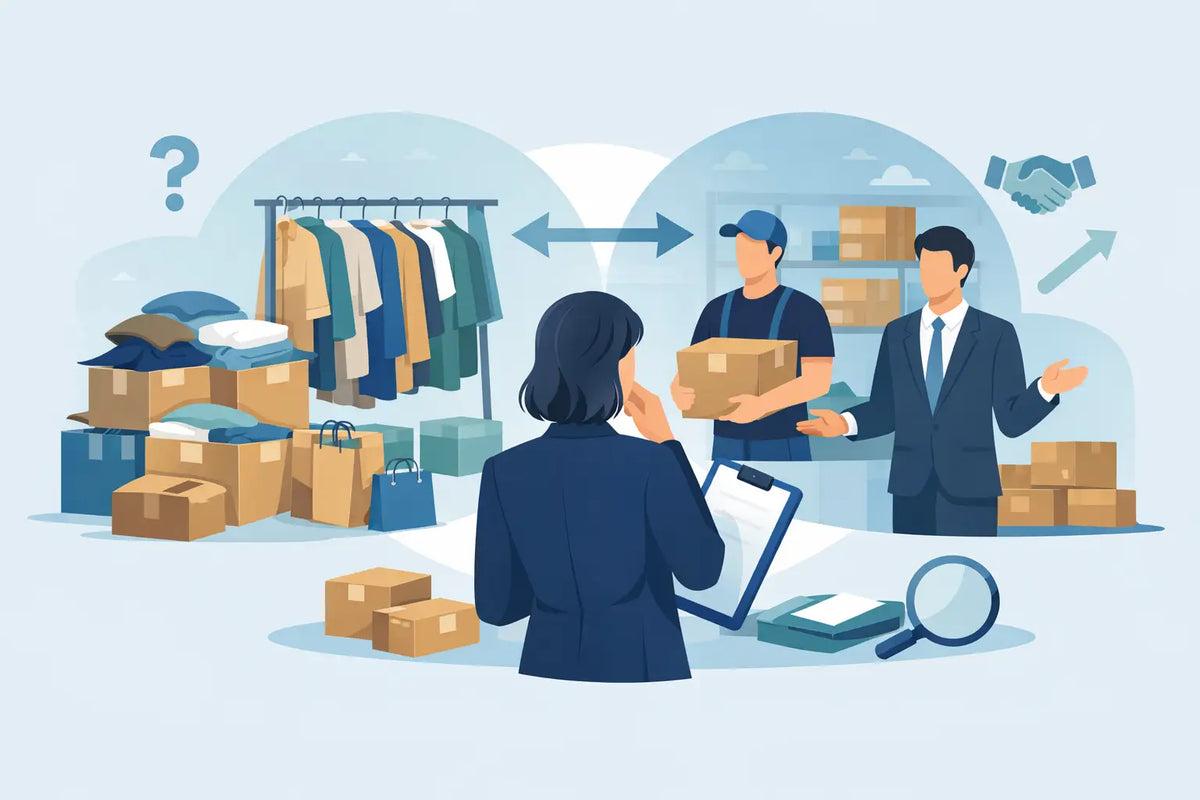
In a secondary channel, the trade often centers on surplus inventory. This includes excess stock, end-of-season goods, showroom samples, customer returns by grade, canceled retail programs, and mixed branded lots. These goods move through wholesalers, export traders, off-price networks, outlets, online resellers, and independent merchants.
For many buyers, this secondary channel is where textile trade becomes commercially attractive. The value is not in exclusivity. The value is in price gap, availability, and turnover.
The main product categories in textile trade
Textile trade covers a broad range of goods, and buyers need to know which segment they are actually operating in.
At the upstream level, the trade can involve cotton, wool, polyester, viscose, yarns, greige fabrics, dyed fabrics, and technical textiles. These categories matter more to manufacturers, converters, and large-scale sourcing offices.
At the finished-goods level, the trade includes men’s, women’s, and kids’ apparel, knitwear, denim, outerwear, underwear, sportswear, footwear, bags, and accessories. This is the side most relevant to wholesalers, stock buyers, outlet operators, and e-commerce resellers.
Then there is the stock business, which sits in a very specific part of textile trade. Here, buyers purchase leftover branded inventory in bulk or in selected lots. That can mean full packages, category-based stocklots, or even individual pieces when a platform is structured for smaller professional buyers such as sole proprietors and private entrepreneurs with a B2B account.
How textile trade works in practice
The process usually starts with a source of goods. That source may be a factory with excess output, a brand clearing old inventory, an importer reducing stock, a retailer liquidating goods, or an intermediary consolidating lots from multiple suppliers.
A trader evaluates the offer based on brand, quantity, size ratio, season, product condition, packing, documentation, and resale restrictions. Price is critical, but it is never the only variable. Cheap stock with poor size balance or unusable assortments can sit in a warehouse longer than expected and damage margin.
Once the goods are approved, the trader or buyer organizes the commercial side: invoice, packing list, HS codes, export documentation, origin details where required, transport planning, and tax treatment depending on destination market. In cross-border business, execution matters as much as sourcing.
After arrival, the goods may go straight into wholesale distribution, retail stores, outlet channels, online resale, or export redistribution. Some buyers work on fast stock turn. Others build margin by sorting, repacking, or splitting lots by market.
Why buyers enter textile trade
The answer is simple: access and margin.
A buyer who participates in textile trade can source goods outside standard retail procurement channels. That creates options. Instead of buying only from current-season brand collections with rigid terms, they can buy overstock, branded surplus, or mixed lots at prices that support off-price resale.
This model suits discount retail, marketplace sellers, independent stores, exporters, and wholesalers serving value-driven markets. Recognizable labels help move product faster, especially when the pricing leaves room for a competitive retail offer.
There is also a scale advantage. A business can buy container quantities, pallet quantities, or selected packages depending on its model. Some trade platforms are built for volume buyers, while others also serve smaller operators who need branded goods in lower quantities but still buy professionally.
What makes textile trade profitable
Profit in textile trade usually comes from one or more of four factors: buying below standard wholesale levels, placing stock into a stronger market, moving inventory faster than competitors, or handling product categories others cannot organize efficiently.
But there is always a trade-off. A low price can come with limited assortment visibility. A strong brand can come with territorial restrictions. Large-volume lots can improve unit economics but increase stock risk. Export opportunities can be attractive, but only if documentation and market compliance are handled correctly.
Experienced buyers do not chase the lowest price alone. They calculate landed cost, resale speed, defect tolerance, and channel fit. A branded jacket lot that looks expensive on paper may outperform a cheaper unbranded lot if turnover is faster and markdown pressure is lower.
Risks and friction points in the textile trade
Textile trade is practical work. The problems are usually practical too.
Authenticity is one of the first issues. In branded stock, buyers need confidence that goods are original and commercially tradable. The second issue is stock accuracy. A lot described as balanced may arrive with weak size distribution, missing labels, or inconsistent packing.
Market restrictions also matter. Some goods can be sold within the EU, some are more suitable for export outside the EU, and some require careful handling based on brand policy or destination rules. Buyers need clarity before payment, not after the goods are in transit.
Then there is timing. Good deals disappear quickly, especially in branded surplus. Buyers who move slowly often lose access. Buyers who move too fast without checking details can inherit dead stock.
What is textile trade for modern B2B buyers?
For a modern wholesale buyer, asking what is textile trade is really asking how to build repeatable sourcing outside rigid brand distribution. The answer is that textile trade is a market system for moving goods where standard supply and demand do not always line up neatly.
It includes first-line manufacturing supply, but for many commercial buyers the real opportunity is in inventory imbalance. One company has excess stock. Another has a retail channel that can sell it. The trader closes that gap.
That is why international stock platforms matter. They reduce friction between surplus supply and active demand. A buyer can register, review available stocklots, compare categories, and purchase based on quantity, brand, and destination strategy. In that environment, textile trade becomes less abstract and more operational.
A business such as Stock IT B2B sits directly in that space by aggregating branded leftover stock, samples, and surplus inventory for professional buyers who need product access, flexible quantities, and cross-border trade capability.
Who should pay attention to textile trade?
Not every business needs it. If you run a tightly controlled mono-brand store, secondary-market stock may not fit your model. If you need fixed collections with guaranteed repeats, surplus trade will not always give that consistency.
But if you run an outlet, discount chain, independent fashion store, export business, online resale operation, or mixed-category wholesale business, textile trade can be a strong sourcing channel. It is also relevant for smaller professional buyers who are registered as a company or private entrepreneur and want access to individual branded pieces without committing to full factory-scale volume.
The key is to match the buying method to your sales channel. Some businesses need deep lots and fast export. Others need curated packages with better assortment control. Good textile trade is not one-size-fits-all. It is channel-driven buying.
The buyers who do best in this market are usually the ones who stay disciplined: they know their customer, know their landed cost, and know when a stocklot is a real opportunity versus just cheap inventory. That is where textile trade stops being a broad industry term and starts becoming a workable business model.