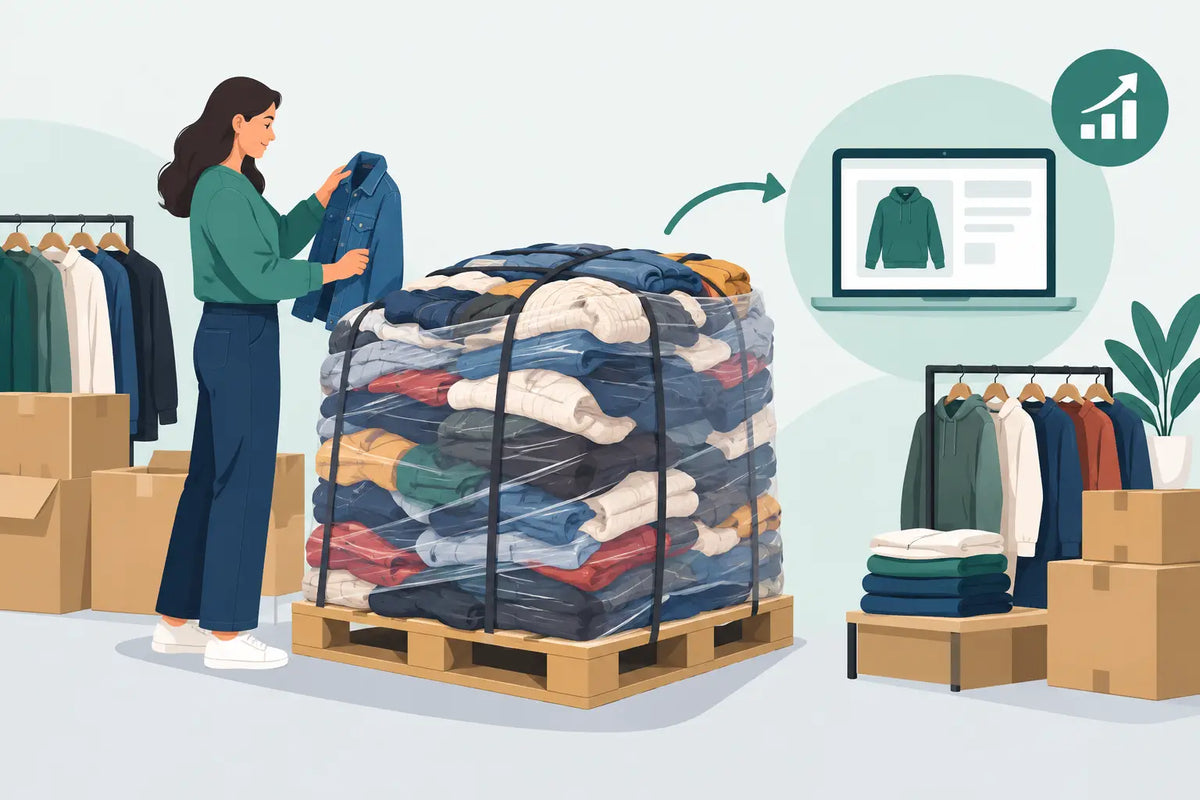
How to Buy Mixed Apparel Pallets for Resale
Buying mixed apparel pallets is not a matter of finding the lowest price per piece. To know how to buy mixed apparel pallets profitably, a buyer must understand what is inside the lot, how the goods can be sold, and what the full landed cost will be before placing an order. A pallet that looks cheap can become slow, expensive inventory if the sizes, categories, condition, or brands do not fit your sales channel.
For off-price stores, outlet operators, online resellers, and export traders, mixed pallets can be an efficient way to add recognizable apparel, shoes, and accessories without committing to a full seasonal collection. The opportunity is real, but the purchase must be treated as stock buying, not speculative shopping.
Start With Your Sales Channel, Not the Pallet
The right pallet depends on where and how you sell. A discount store can absorb a broader mix of categories and sizes than a focused online boutique. An export buyer may prioritize brand recognition and volume, while a small entrepreneur selling through a marketplace may need fewer units, clearer product details, and manageable storage.
Before requesting an offer, define the customer you are buying for. Consider your preferred retail price range, the labels your buyers recognize, the season you can sell now, and the categories that already move in your business. Mixed apparel pallets may include men's, women's, and children's clothing, or they may contain a category mix such as knitwear, denim, outerwear, footwear, and accessories. More variety is not automatically better. It is better only when you have a route to market for that variety.
A retailer with strong local demand for casual branded clothing may do well with a mixed pallet containing Tommy Hilfiger, Gant, Tom Tailor, S.Oliver, or U.S. Polo Assn. A fashion-led e-commerce seller may prefer more selective lots with brands such as Desigual or Mötivi. The product mix should support your existing customer base rather than force you to build a new one around one purchase.
Ask What “Mixed” Actually Means
Mixed is a commercial description, not a complete specification. One pallet may be mixed by size, color, model, or category. Another may contain several brands and product types. Buyers should always ask for the level of assortment detail available before calculating a resale margin.
A supplier may provide a manifest, packing list, product photos, quantity by carton, brand breakdown, category allocation, or an average price per unit. Not every stocklot will have a full item-level manifest. Surplus inventory, samples, and leftover collections are often sold as commercial lots, so information can vary by source. What matters is that the information provided is clear enough for you to price the risk.
Confirm whether the quoted quantity is exact or estimated. Ask if the pallet contains only apparel or includes shoes and accessories. Check whether sizes are balanced, whether seasonality is mixed, and whether the lot includes men's, women's, children's, or unisex goods. If there is no manifest, request representative photos and a direct explanation of how the goods were sorted.
A good buying decision is based on known facts and an acceptable allowance for unknowns. Do not value every piece at the same resale price simply because it comes from a recognized brand.
Check Condition and Label Status
Condition determines both your selling price and your selling channel. New stock with original tags can usually support a different retail strategy than goods without tags, samples, customer returns, or items with minor defects. These categories are all traded in the market, but they should never be treated as interchangeable.
Use clear condition language in your purchase discussion. New with tags, new without tags, sample collection, overstock, shelf pull, and graded returns each carry a different commercial meaning. If the goods are labeled as mixed condition, ask how the mix is graded and whether damaged or incomplete units are included.
You should also confirm label status. Are original brand labels present? Have price tags been removed or covered? Are there restrictions on using brand names in advertising? These details affect how you list the goods online, display them in store, and communicate with customers. For branded stock, accurate product representation protects your reputation and reduces disputes.
Verify the Supplier and the Goods
In stock apparel, a low price is only useful when the supply chain is credible. Work with a supplier that operates as a real B2B business, provides commercial documentation, answers product questions directly, and explains payment, shipping, and claim procedures before payment.
For branded pallets, request documentation appropriate to the transaction, such as an invoice, packing list, and available product information. Review photos carefully for brand labels, style consistency, packaging, and visible wear. If you are buying a large volume for the first time, a smaller trial lot can be a sensible way to test product quality, communication, delivery timing, and sell-through in your market.
Authentication is not a box to check after the shipment arrives. It belongs in the sourcing process. Be cautious of generic descriptions that promise premium labels but provide no usable breakdown, no images, and no clear explanation of condition. Professional suppliers understand that trade buyers need enough information to assess inventory before committing capital.
Calculate Landed Cost Per Sellable Unit
The purchase price is only the first line in the calculation. Your true cost includes freight, handling, insurance where applicable, import duties, taxes, customs clearance, warehouse labor, and the expected cost of units that will not sell at full price.
Use this simple approach:
Landed cost per sellable unit = total purchase and delivery cost ÷ expected sellable units
The key word is sellable. If a pallet holds 500 pieces but you expect 8% to be damaged, out of season, missing components, or unsuitable for your market, calculate your cost across 460 sellable pieces, not 500. This creates a more realistic margin target.
Then set a resale plan by category. Branded outerwear, denim, shoes, and accessories often have different price potential and different selling speed. A mixed pallet may contain high-value pieces that support margin alongside basic items that need fast markdown pricing. Your plan should allow for both.
For international orders, establish who handles freight and export documentation and where responsibility transfers from supplier to buyer. Buyers importing into the United States should confirm applicable customs requirements, duties, product labeling obligations, and any restrictions before shipment. If goods are intended for resale in another country, assess that market's rules instead. Cross-border trade is profitable when the paperwork and landed-cost model are settled upfront, not after the goods are in transit.
Match Order Size to Cash Flow and Storage
Pallet buying rewards buyers who can process inventory quickly. It does not reward filling a warehouse with goods that cannot be photographed, sorted, priced, or displayed. A large pallet can reduce the unit purchase price, but it also increases cash tied up in stock and may slow your ability to buy the next opportunity.
Estimate how many units you can receive, inspect, and list or place on the sales floor each week. Factor in rack space, carton storage, staff time, photography, steaming, tagging, and returns management for online sales. If you are a smaller reseller, opening a B2B account as a private entrepreneur or company can provide access to individual branded pieces as well as larger packages, shoes, and accessories. That can be a better starting point than purchasing a full mixed pallet before your process is ready.
For established buyers, mixed pallets work best when they fill a defined gap: a back-to-school assortment, a branded basics refresh, an outlet promotion, or an export order requiring variety. At Stock IT B2B, professional buyers can source stocklots based on available inventory and their own commercial requirements rather than waiting for primary-season distribution.
Inspect Fast and Separate Stock Immediately
Once the pallet arrives, count cartons and compare them with shipping documents before putting goods into storage. Inspect a representative portion immediately, or inspect every unit when the lot is small enough. Record shortages, visible damage, missing tags, and major discrepancies with photos and a clear count.
Sort the inventory into sellable categories right away. Separate by gender, size, category, brand, and condition. This makes pricing faster and exposes any imbalance early. It also prevents good products from disappearing inside unsorted cartons while lower-value goods take up selling space.
Do not wait weeks to discover that your strongest items are hidden in the last boxes. The sooner stock is organized, the sooner it becomes cash flow. Give your best-known brands and most seasonal products priority in listings, displays, and customer outreach, then use value bundles or clearance strategies for slower categories.
Buy for Turnover, Not Just Margin
A pallet with a high theoretical markup can still be a poor purchase if it sits for months. The best mixed apparel pallets combine enough brand value to attract customers with enough practical assortment to sell across sizes and price points. Your target is not the biggest discount on paper. It is inventory that arrives, gets processed, and turns into repeatable sales.
Treat every first order as market data. Track what sold, what needed markdowns, which sizes were missing, and which brands brought customers back. The next pallet should be bought with that evidence in hand, not with a wider guess.