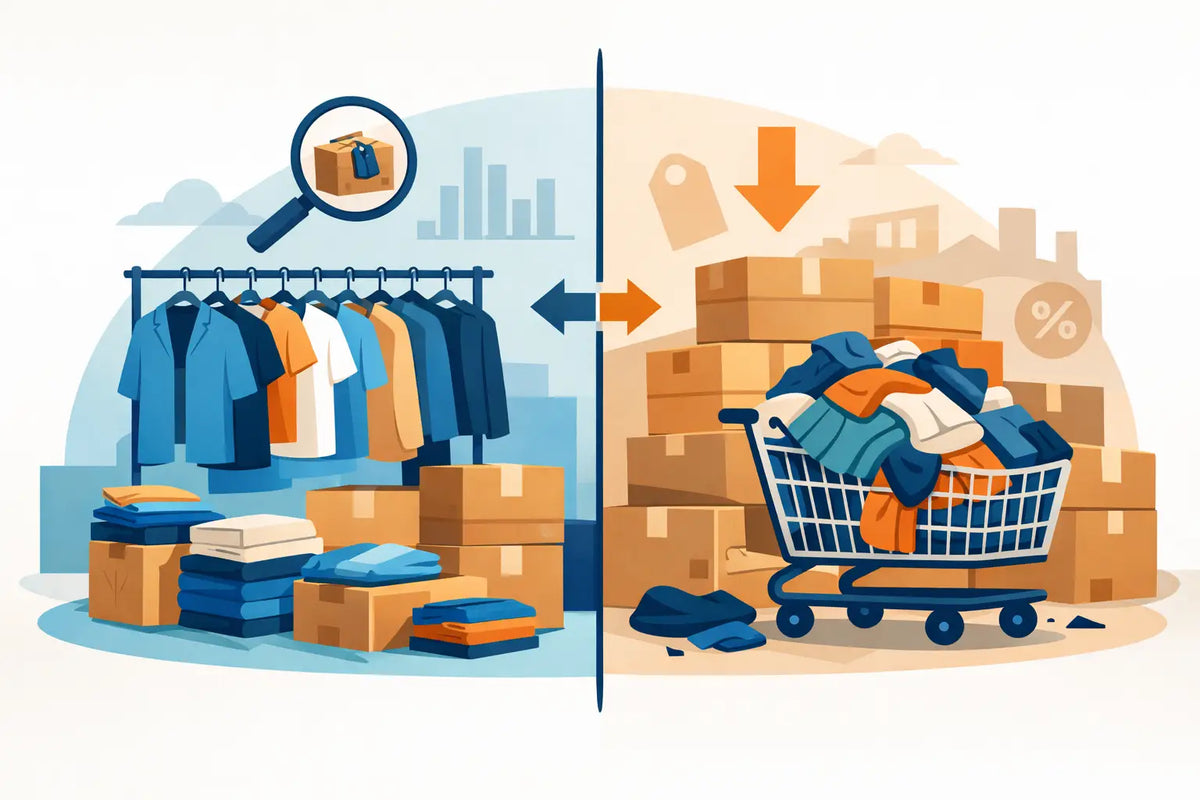
How to Source SHEIN Wholesale the Right Way
SHEIN moves fast, and that is exactly why buyers get this wrong. If you are figuring out how to source SHEIN wholesale, the real job is not just finding product. It is finding the right stock channel, at the right price level, with documentation, consistency, and resale logic that works for your market.
For professional buyers, SHEIN wholesale usually does not mean buying directly from a standard brand wholesale program in the traditional fashion sense. In most cases, it means sourcing through secondary channels such as stocklots, surplus inventory, canceled orders, overproduction, returns-selected goods, and other off-price opportunities. That distinction matters because it affects price, quantity, assortment, packaging, and resale conditions.
How to source SHEIN wholesale in practice
The fastest way to lose margin is to treat SHEIN stock like a standard in-season wholesale line. It is not. Buyers need to approach it as opportunistic branded inventory, where availability changes, lot composition varies, and speed matters.
In practice, sourcing starts with the channel. If you are buying for off-price retail, online resale, outlet distribution, export, or discount chain supply, you need a supplier that works in branded stock apparel, not a consumer-facing seller and not a general marketplace middleman with unclear origins. A proper B2B stock supplier should be able to explain where the goods come from, how the lot is packed, whether it is mixed or sorted, and what paperwork is available.
That is the difference between buying inventory and buying a problem.
Understand what kind of SHEIN stock you are buying
Not all wholesale SHEIN goods are equal, even when the label is correct. Some lots come from surplus inventory. Some come from sample collections. Some come from store pullbacks, canceled orders, or end-of-line stock. Some are mixed-grade opportunities where the low entry price looks attractive, but the sell-through is weaker.
Before you buy, ask what the stock actually is. Is it women’s apparel only, or mixed categories including accessories and shoes? Is it season-specific or all-season? Are sizes balanced or broken? Are pieces individually packed, tagged, and ready for resale? If the supplier cannot answer those questions clearly, you are not looking at a professional wholesale setup.
For many buyers, the best SHEIN stock is not the absolute cheapest lot. It is the lot with the cleanest resale path. A slightly higher buy price can still produce a stronger margin if the goods are better sorted, better packed, and easier to move quickly.
Where buyers usually source SHEIN wholesale
There are several sourcing routes, and each comes with trade-offs.
The first route is direct access to stock apparel wholesalers that specialize in branded surplus and leftover inventory. This is often the most practical route for resellers, off-price stores, and import-export traders because the supplier has already aggregated stock into tradable lots. You are paying for access, speed, and market-ready inventory, but you save time and reduce sourcing risk.
The second route is buying through broader liquidation or surplus networks. This can work if you already have quality control processes and the ability to absorb mixed outcomes. The upside is pricing. The downside is inconsistency. One lot may perform well, while the next has size imbalance, weak category mix, or packaging issues.
The third route is through international B2B stock platforms that sell branded clothing in bulk and sometimes also allow smaller professional buyers to purchase individual pieces. That is useful if you are testing demand, opening a new resale channel, or operating as a private entrepreneur with a B2B account rather than as a large-volume chain buyer.
For many businesses, the right answer depends on volume. If you are buying containers or large mixed lots, consistency and documentation matter more than chasing the lowest theoretical unit cost. If you are buying smaller quantities, flexibility matters more.
What to check before committing to a supplier
A serious supplier should be able to discuss stock structure in commercial terms. Ask for brand confirmation, category breakdown, quantity, packing method, condition, and country of shipment. Ask whether the lot is available for sale inside the EU, for export outside the EU, or both. Those details affect where and how you can resell.
You should also ask for realistic quantity expectations. Some buyers want repeatability, but stock business does not work like a fixed-price replenishment model. The supplier may not have the same lot next month. What you want instead is a supplier with ongoing access to branded apparel flows, so even if one lot is gone, another relevant opportunity follows.
Photos and sample manifests help, but they should not replace actual stock information. A clean image tells you very little about size spread, seasonality, or resale speed.
Pricing, margins, and why the cheapest lot can cost more
When buyers search how to source SHEIN wholesale, the first instinct is usually price. That is understandable, but it is only half the calculation.
Margin in stock apparel comes from the relationship between buy cost, sorting quality, and sell-through speed. A very cheap lot with weak category balance can sit in inventory too long, force markdowns, and tie up cash. A better structured lot can turn faster, even if the entry price is higher.
This is especially relevant for SHEIN because the brand performs best when the assortment feels fresh and commercially usable. Trend-driven apparel loses value quickly when the category mix is off-season, over-represented in weak sizes, or too random for your customer base.
Professional buyers should build margin models around realistic exit prices, not best-case prices. If you sell through marketplaces, include platform fees, returns, relabeling work, and labor. If you run physical retail, account for display losses, slower movers, and markdown pressure. If you export, include freight, duties, and customs handling in your landed cost.
That is where many deals stop looking attractive.
How to match SHEIN stock to your sales channel
A good wholesale buy is channel-specific. A mixed SHEIN lot that works for an outlet or discount store may not work for a curated online seller. A lot with broad SKU diversity may be ideal for live-selling or social commerce, while a more consistent category lot may work better for marketplace listings and repeat order structures.
If you run off-price retail, mixed branded stock often makes sense because customers expect variety. If you are an e-commerce reseller, you may need cleaner categorization, more predictable product data, and stronger size continuity. If you are a wholesaler reselling to smaller merchants, your focus should be lot divisibility and commercial flexibility.
This is why professional buyers do not just ask, “What is the price?” They ask, “Who is this lot for, and how fast can it move?”
Small buyers can still source professionally
Not every SHEIN wholesale buyer is taking pallets or truckloads. Smaller entrepreneurs, independent resellers, and new B2B buyers can still source in a structured way if the supplier allows account-based access and lower-volume purchasing.
That matters because testing product before scaling is often the smarter move. Buying smaller quantities lets you check local demand, confirm your resale pricing, and learn how the stock performs without overcommitting cash. The key is to buy from a wholesale-oriented platform, not from consumer channels disguised as trade supply.
Some B2B sellers also make it possible to register as a private entrepreneur or as a company and buy either stocklots or individual branded pieces. For smaller buyers, that can be the most efficient entry point into branded off-price sourcing.
Common mistakes when sourcing SHEIN wholesale
The biggest mistake is assuming all branded stock is interchangeable. It is not. Lot quality, source type, and packing condition affect resale results more than many buyers expect.
The second mistake is buying without checking destination fit. A lot that sells well in one country may underperform in another because of climate, sizing norms, category demand, or customer price sensitivity.
The third mistake is buying based on screenshots and vague claims. Wholesale apparel is a documentation business. If the seller cannot define the stock clearly, you should assume the lot will create extra work after delivery.
The fourth mistake is expecting primary-market consistency from stock business. Off-price sourcing is opportunity-based. The best buyers stay flexible, move quickly on suitable lots, and build relationships with suppliers that regularly handle surplus branded inventory.
For buyers operating across the EU or exporting outside it, working with a stock specialist such as Stock IT B2B can make that process more practical because the business model is already built around branded leftover apparel, cross-border trade, and wholesale account access.
A practical buying approach that holds up
If you want a clean process, start with your resale channel and margin target, then source stock that fits that model. Ask the supplier to define the lot clearly. Check whether the inventory is surplus, samples, canceled orders, or another stock type. Confirm quantity, condition, and shipping origin. Price the lot based on landed cost and realistic sell-through, not on headline unit price.
That is the core of how to source SHEIN wholesale without wasting time on weak offers. The buyers who do this well are not chasing random deals all day. They are building a repeatable sourcing routine around availability, documentation, and resale speed.
The useful question is not whether you can find SHEIN stock. You can. The useful question is whether you can buy it in a format that still makes sense once it lands in your warehouse and needs to start moving.