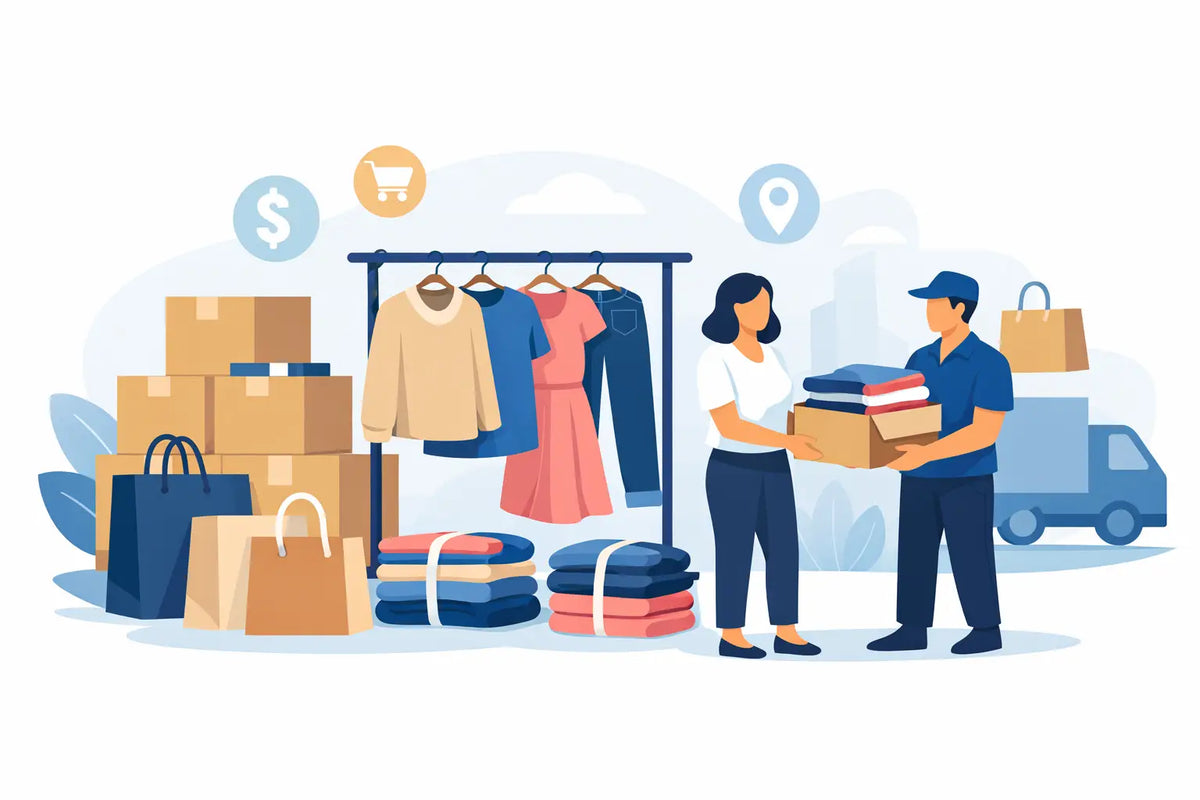
Bulk Lots Versus Single Pieces for Resellers
A branded jacket offered at the right wholesale price can sell quickly. The same jacket, bought in the wrong quantity or size run, can tie up cash for months. That is the real decision behind bulk lots versus single pieces: not simply how many units to buy, but how much commercial risk your business can carry while protecting margin and turnover.
For off-price stores, outlet operators, online sellers, market traders, and export buyers, both buying formats have a place. Bulk stocklots usually deliver the strongest unit economics. Single pieces give you control, flexibility, and a lower entry point. The right choice depends on your sales channel, available capital, customer demand, and ability to move mixed inventory.
What Buying Bulk Lots Means
A bulk lot is a package of apparel, footwear, or accessories sold as a group rather than selected item by item. It may contain one brand, a category such as men's shirts or women's dresses, or a mixed assortment of sizes, colors, styles, and sometimes seasons. Lots can range from small cartons to large wholesale quantities suitable for retail chains, distributors, and export operations.
The core advantage is price. When a supplier moves surplus inventory in volume, handling costs are lower and the buyer normally receives a better price per unit. For a reseller with a tested sales channel, that lower cost can create room for retail discounts while still leaving a workable margin.
Bulk buying also saves time. Instead of selecting hundreds of individual SKUs, a buyer can secure a ready-made quantity in one transaction. This matters when stock availability changes quickly. Recognizable labels such as Tommy Hilfiger, Gant, Desigual, Tom Tailor, C&A, and U.S. Polo Assn. can attract customers without requiring a large marketing effort, provided the assortment fits the local market.
The trade-off is reduced control. A lot may include sizes or colors that are slower in your region. It can contain a mix of commercial winners and less desirable styles. Professional buyers should treat that variation as part of the purchase price, not as a surprise after delivery.
When Bulk Lots Make Commercial Sense
Bulk lots work best when you have predictable demand and a route to market that can absorb volume. A physical outlet with regular foot traffic may move broad mixed assortments well. An online seller with established marketplace data may know exactly which categories, brands, and price bands convert. An importer or distributor may have retail customers ready to take stock immediately.
The strongest bulk buyers typically have three things in place: available working capital, storage capacity, and a clear exit plan for slower units. An exit plan can mean outlet clearance, bundle offers, market sales, secondary wholesale, or export to a market where that product category performs better.
Seasonality matters. A large delivery of jackets at the beginning of the cold season may be a strong opportunity. The same lot at the end of the season needs a much lower buying price and a longer cash-flow horizon. Do not judge a stocklot only by brand name or percentage discount from original retail price. Judge it by the price you can realistically achieve, the selling period, and all costs between arrival and sale.
For mixed lots, ask practical questions before purchasing. Is the quantity exact? What is the category split? Are sizes assorted? Is the condition new, with tags, or otherwise specified? Are there photos, packing information, or a product list? In stock apparel, available detail can vary by lot, but buyers should understand the composition they are paying for.
What Single Pieces Offer a Reseller
Single-piece purchasing means selecting individual clothing items, shoes, or accessories rather than committing to a fixed lot. The price per item is usually higher than a comparable bulk purchase, but the buyer gains much more control over assortment.
This is valuable for smaller online stores, boutique resellers, and new B2B buyers testing a brand or category. You can choose sellable sizes, avoid colors that do not move in your market, and build a narrower offer around the products your customers already buy. A seller specializing in branded polos, for example, may prefer to select individual Gant or Tommy Hilfiger pieces instead of accepting unrelated items in a mixed stocklot.
Single pieces also help buyers replenish proven products without overcommitting. If black sneakers, logo T-shirts, or lightweight jackets have consistent demand, selective purchasing lets you add inventory while keeping the assortment focused. It reduces the chance of paying for unwanted units simply to access a few desirable ones.
This option is not limited to large companies. A private entrepreneur or registered company can create a B2B account and buy individual branded clothing, shoes, and accessories according to their budget and sales plan. It is a practical starting point for smaller merchants building purchasing history before moving into larger quantities.
The Cost Difference Is More Than Unit Price
Comparing bulk lots versus single pieces only by wholesale unit price is a common purchasing mistake. Bulk may cost less per garment, but the total cash commitment is higher. You also need to account for freight, storage, sorting, photography, listing, returns, discounting, and the time required to sell the full quantity.
Single pieces may have a higher purchase cost, yet they can produce a better return on capital when inventory turns quickly. A small, carefully selected order that sells in two weeks can be commercially stronger than a large lot that sits for six months.
Use landed cost, not just supplier price. Landed cost includes the product cost plus transport, import-related expenses where applicable, handling, and preparation for sale. Then estimate a realistic selling price, not the best possible price. This gives you a clearer gross-margin target and shows whether the deal works under normal market conditions.
A simple buying calculation is useful: expected sales revenue minus landed cost, selling expenses, and an allowance for markdowns. For a mixed lot, build in a percentage for slow-moving stock. If your numbers only work when every unit sells at full price, the purchase is too optimistic.
Choose Based on Your Sales Channel
Your selling channel should guide the buying format. Physical discount stores can often handle mixed bulk inventory because shoppers enjoy searching for branded deals and product rotation creates urgency. Larger retailers and distributors may also benefit from volume, especially when they can split stock across several locations or customers.
E-commerce sellers need more control. Product photos, descriptions, size availability, shipping, and returns all add labor. For a focused online catalog, selected individual pieces or smaller category-specific lots are often easier to manage. That does not mean bulk is wrong for online retail. It means the lot must match the way you list, store, and fulfill products.
Export buyers may prioritize bulk because container utilization and consolidated shipments improve economics. Still, local regulations, labeling requirements, seasonal demand, and brand distribution restrictions must be checked before committing. A low wholesale price does not solve a market-access problem.
A Practical Buying Approach
Many growing resellers do not need to choose one format permanently. Start with individual pieces or smaller lots when entering a new category, brand, or market. Track sell-through by size, style, color, and price point. Once demand is proven, move to larger stocklots where the unit-price advantage is meaningful.
For example, an online reseller may first test selected branded shirts and sneakers. If the products sell consistently and customer demand is clear, the next purchase can be a larger lot in that category. The buyer is no longer guessing. They are using sales data to buy more aggressively.
At Stock IT B2B, this mixed approach can suit buyers at different stages: individual items for controlled assortment building, and stocklots for buyers ready to increase volume and improve unit cost. The goal is not to buy the largest quantity available. It is to buy inventory your business can sell at the right speed.
Before placing any order, set a maximum budget, a target margin, and a planned selling period. If a bulk lot meets those limits and your sales channel can absorb it, volume can create a strong buying opportunity. If demand is uncertain, use single pieces to learn cheaply. Buy the quantity that keeps stock moving, cash available, and your next purchase possible.