Export Stock Versus EU Sales for Apparel Buyers
A low price on branded apparel means very little if the goods cannot be sold in your intended market. That is the real issue behind export stock versus EU sales. Both can be legitimate wholesale opportunities, but they come with different resale rights, paperwork, customer reach, and margin calculations. For an outlet operator, online reseller, or import-export trader, choosing the wrong route can turn a fast-moving lot into blocked inventory.
Export Stock Versus EU Sales: The Core Difference
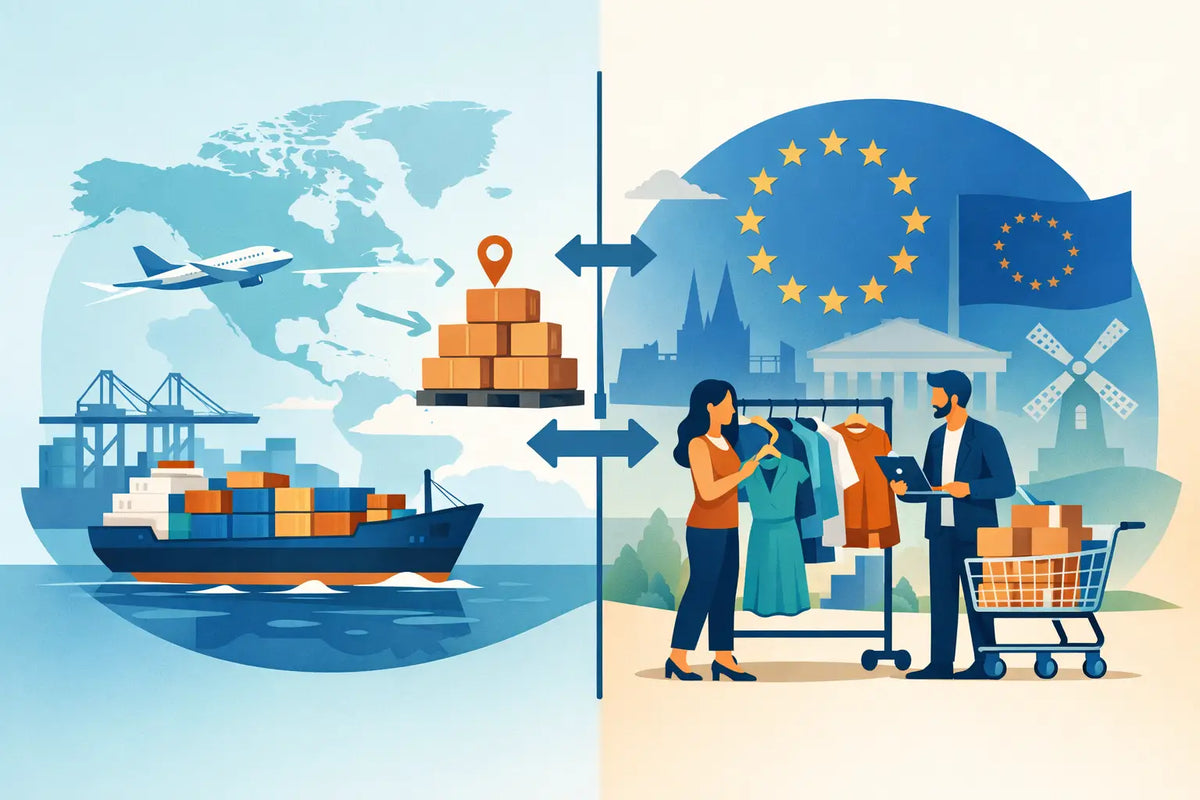
The distinction usually concerns where the buyer is permitted to resell the goods. Export stock is supplied for markets outside the European Union. EU sales stock is intended for resale within the EU, subject to the terms agreed for the lot and the applicable tax and commercial rules.
This is not simply a question of shipping destination. A truck can deliver goods to an EU warehouse while the stock remains export-only under the supplier's commercial conditions. Likewise, a buyer outside the EU may purchase stock originally cleared for EU distribution, provided the supplier's sales terms allow it. The key document is the lot-specific sales condition, not assumptions based on where the cartons are stored.
For branded surplus clothing, shoes, and accessories, territorial conditions can be tied to brand distribution strategy, prior customer commitments, packaging requirements, or the channel in which the stock was originally intended to move. A supplier may therefore offer identical-looking products under different resale conditions.
When Export Stock Makes Commercial Sense
Export stock is often attractive because it gives traders access to branded surplus at aggressive wholesale pricing. The buyer may be able to purchase larger mixed lots, clear seasonal inventory quickly, and target markets where recognized European and global labels carry strong demand.
For a distributor selling into the Middle East, Africa, Latin America, the Balkans outside the EU, or other non-EU destinations, export stock can be a practical fit. The commercial model is straightforward: buy a documented lot, arrange export, manage customs clearance, and sell through local wholesale, outlet, or e-commerce channels.
The trade-off is that export stock should not be treated as a flexible option for EU resale. If the lot is sold on an export-only basis, advertising it to EU consumers or supplying EU retailers can create a problem with the supplier agreement. It may also expose the buyer to claims, chargebacks, or the loss of a valuable sourcing relationship.
Export buyers should also calculate the full landed cost, not only the carton price. Freight, export declarations, import duties at destination, customs brokerage, local taxes, warehousing, and last-mile distribution can change the margin significantly. A low unit cost remains valuable only when the route to market is controlled.
Documentation matters before goods leave the warehouse
For export transactions, paperwork is part of the product. Buyers commonly need a commercial invoice, packing list, transport documents, export declaration support where applicable, and accurate product descriptions for customs. Depending on the destination, fiber composition, country-of-origin information, labeling, and product classification may also affect clearance.
Ask for the information required by your forwarder before payment and loading. If your market requires special labels or language-specific consumer information, budget time and cost for compliant relabeling where permitted. Do not wait until the shipment reaches the border to check these details.
When EU Sales Are the Better Choice
EU sales stock is designed for buyers whose retail activity is inside the European Union. This may include physical outlet stores, discount chains, online shops serving EU consumers, market sellers, and regional wholesalers supplying EU-based retailers.
The main advantage is market access. When a lot is authorized for EU sales, the buyer can build a more direct commercial plan around EU demand rather than treating the territory as off-limits. This matters especially for sellers using EU fulfillment centers, European marketplaces, or stores close to the source warehouse.
EU sales can also simplify logistics. There is generally no external customs border movement when goods are transported between EU member states, although VAT treatment, invoicing requirements, and reporting obligations still require proper handling. A business buyer should confirm its VAT status, provide valid company details where required, and work with its accountant or tax adviser on the correct treatment of each transaction.
However, EU sales stock may not always be the lowest-priced option. A lot with broader permitted resale can command a higher wholesale price because it gives the buyer access to a larger and often more competitive market. That higher purchase cost can still be worthwhile if it reduces legal uncertainty and allows faster turnover through established EU channels.
EU resale still has limits
“EU sales” does not mean every sales channel, every country, or every promotion method is automatically approved. Some lots may have restrictions related to online marketplace sales, specific countries, removal of original price tags, use of brand imagery, or sale through certain discount formats. Terms vary by supplier and by stocklot.
Professional buyers should request clarity in writing on the permitted territory and any channel restrictions. If you plan to sell through your own website, a third-party marketplace, wholesale customers, or a chain of stores, say so before purchasing. A vague understanding is not enough when the order involves several pallets or thousands of units.
Compare the Route to Market, Not Just the Price
A useful buying decision starts with your actual customer base. If 80 percent of your turnover comes from EU online sales, export-only stock may look cheap but does not suit your business model. If you already have strong non-EU wholesale customers and a reliable freight partner, export stock may deliver better margin and less direct competition.
Consider these practical questions before confirming a lot:
- Where will the final customer receive the goods?
- Is the lot authorized for that resale territory and sales channel?
- What documents will customs, tax authorities, or your marketplace require?
- Can your current logistics partner handle the route at a predictable cost?
- Does the assortment match the season, sizing, and price level of your market?
How Different Buyers Should Approach Stocklots
Large wholesalers and outlet groups usually benefit from separating their purchasing by territory. Keep export-only inventory in a clearly identified workflow, with separate product records, sales teams, and destination controls. This reduces the chance of an EU customer receiving a product that was purchased for non-EU export.
E-commerce resellers need to be particularly disciplined. A product feed can reach multiple countries quickly, and automatic shipping settings may expose export-only inventory to EU customers. Use inventory tags, shipping restrictions, and clear internal procedures before uploading branded goods for sale.
Smaller buyers can apply the same principle without operating at pallet scale. A private entrepreneur or registered company can create a B2B account and purchase individual branded clothing, shoe, and accessory pieces when available. The purchase volume may be lower, but the territory condition is just as important. A single item listed in the wrong market can create unnecessary risk.
At Stock IT B2B, professional buyers should review each available stocklot as a separate commercial opportunity. Brand, quantity, condition, assortment, and permitted sales territory all affect the real value of the offer. Do not assume that one lot's conditions apply to the next, even when the labels are similar.
Build Territory Checks Into Every Purchase Order
The best buyers make territory verification a standard purchasing step, not an afterthought. Before funds are transferred, confirm the buyer entity, delivery country, final resale market, and intended sales channel. Keep the invoice, correspondence, lot description, and any stated restrictions together in your purchase file.
This process protects more than compliance. It helps your team price correctly, plan distribution, and avoid tying up capital in inventory that cannot be sold through your strongest channels. It also makes future sourcing easier because suppliers see that you handle branded stock professionally.
A good stock deal is not the one with the lowest sticker price. It is the lot you can document, move, and resell quickly in the market where your customers are ready to buy.