Wholesale Fashion Pallets for Resale Buyers
A pallet can solve a stock gap quickly, but only when the goods match the way you sell. Wholesale fashion pallets give retailers, outlet operators, online sellers, and export traders access to bulk apparel, footwear, and accessories at off-price levels. The opportunity is clear: recognizable labels, lower unit costs, and inventory that can move without waiting for a new season. The work is in buying the right mix, at a price that leaves room for freight, handling, and margin.
What Wholesale Fashion Pallets Contain
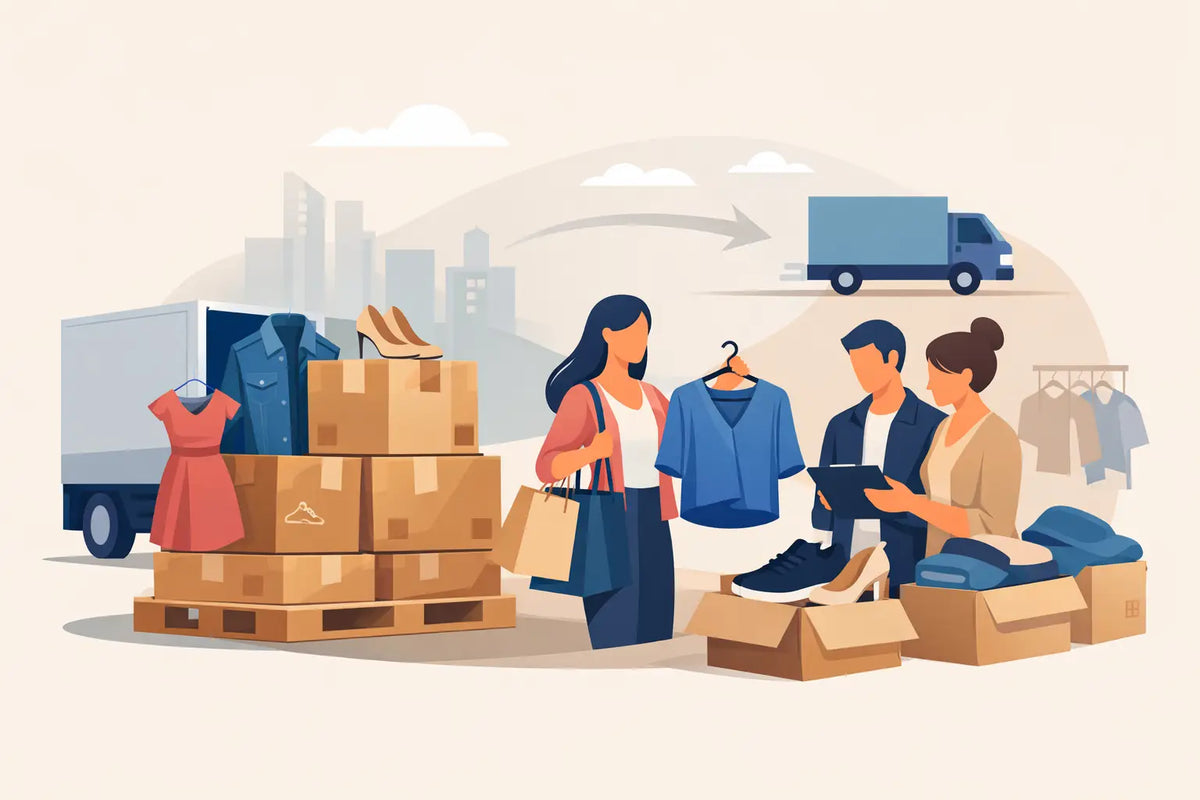
A fashion pallet is a bulk shipment of clothing, shoes, accessories, or mixed categories packed for wholesale sale. It may include leftover stock, canceled orders, past-season goods, sample collections, overproduction, or retail surplus. Pallets can be built around one brand, one category, one gender segment, or a broader mixed assortment.
For a buyer, the useful question is not simply how many pieces are on a pallet. It is what those pieces are, who will buy them, and how quickly they can be listed or put on the floor. A pallet of branded men's polos may be highly effective for an outlet retailer with a consistent customer base. The same pallet may be less useful for a seller whose demand is mainly women's fashion or trend-led items.
Stock condition also matters. Some lots are new with tags, while others may be new without tags, samples, customer returns, or goods with minor defects. These categories should not be treated as interchangeable. They require different pricing, merchandising, and customer communication.
Why Resellers Buy Fashion Pallets
The main commercial advantage is purchasing power. Buying by pallet usually brings the cost per piece below smaller package pricing, giving a reseller more room to compete while protecting gross margin. It also creates immediate volume, which is valuable when a store needs to refresh racks, fill an online catalog, or supply smaller wholesale customers.
Recognizable brands can reduce the effort required to sell the product. Labels such as Tommy Hilfiger, Gant, Tom Tailor, Desigual, C&A, S.Oliver, U.S. Polo Assn., Mötivi, and SHEIN can be easier for customers to understand than unknown fashion stock. Brand recognition does not remove the need for proper assortment planning, but it can support faster conversion when the retail price is realistic.
Pallet buying is not only for large chains. A private entrepreneur with a B2B account can buy individual branded pieces or smaller stock packages to test categories before committing to higher volume. This is often the practical route for marketplace sellers, boutique owners, and new online stores building a repeatable sourcing process.
How to Evaluate a Wholesale Fashion Pallet
A low headline price is not enough. Professional buyers assess the full landed cost and the sell-through potential before they place an order.
Start with the assortment
Ask for a clear description of the lot: brand, category, gender, season, size range, colors, and quantity. For mixed pallets, the ratio between apparel, footwear, and accessories can have a major effect on resale value. A balanced mix can work well for a discount store. An e-commerce seller may prefer more uniform lots because photographing, listing, and pricing become simpler.
Size runs deserve special attention. A pallet heavily weighted toward very small or very large sizes can still be profitable, but only if those sizes fit your market. The same applies to seasonal goods. Lightweight shirts may sell well in one export destination while outerwear has stronger demand elsewhere. Do not buy against your sales calendar just because the unit price looks attractive.
Confirm condition and presentation
Condition determines both the resale channel and the labor required after delivery. New, tagged items generally suit outlets, boutiques, and branded e-commerce. Samples may be suitable for clearance specialists. Goods with defects need a dedicated discount channel and a lower recovery expectation.
Request information on packaging and labeling as well. Loose goods, mismatched hangers, damaged polybags, or incomplete labels do not necessarily make a lot unsuitable, but they add handling time. If your team needs to sort, steam, rebag, count, and photograph every item, that cost belongs in the purchase decision.
Calculate landed cost, not purchase cost
The true cost per piece includes the lot price, transport, customs where applicable, insurance, unloading, sorting, storage, and payment costs. For international trade, currency movement and import rules can also change the final result. Buyers operating inside the EU and those exporting outside the EU may face different documentation, tax, and distribution requirements.
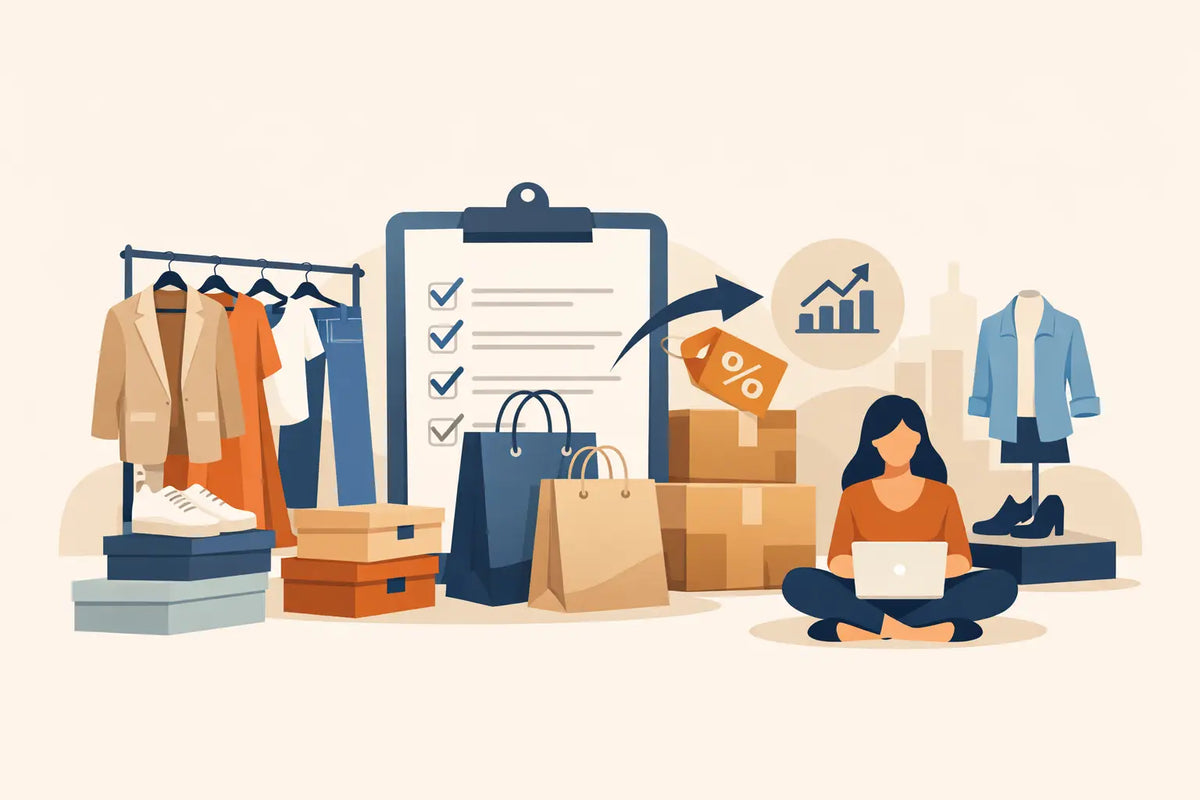
A simple margin model keeps decisions disciplined. Estimate the average selling price you can realistically achieve, then subtract every direct cost attached to the lot. Build in a percentage for slow-moving items, missing sizes, or pieces that must be discounted. If the remaining margin only works under perfect conditions, the pallet is too expensive.
Match the Pallet to Your Sales Channel
The best pallet depends on your route to market. Outlet stores often benefit from broad branded assortments that give shoppers choice across sizes and categories. Off-price retailers may prefer larger, consistently priced lots that can be merchandised quickly. Online resellers often do better with cleaner category lots, reliable product information, and goods that can be listed individually without extensive sorting.
Wholesale distributors need another level of planning. If you intend to break a pallet into smaller lots for regional retailers, look for depth in category and brand. A random mix can be difficult to redistribute because each customer wants a usable package, not a few pieces from every category.
Export buyers should also check brand restrictions and destination-market expectations before buying. Some goods may be suitable for export outside the EU but not for a particular sales channel or territory. A supplier should be able to clarify the commercial terms of the stock so that buyers can make responsible distribution decisions.
Common Buying Mistakes
The most expensive mistake is buying volume without a sales plan. A pallet may contain excellent goods, but it becomes dead stock if it does not match the store, audience, price point, or season. Margin is created at purchase, but it is realized only when the goods move.
Another mistake is assuming every branded item has the same resale value. A brand name helps, yet model, season, condition, size availability, and local demand still determine what customers will pay. A well-known label in an unpopular color or fragmented size range can sit longer than a less famous but better-targeted item.
Buyers also underestimate operational capacity. Bulk stock arrives quickly, while sorting and listing take time. Before receiving a pallet, make sure you have space, staff, SKU procedures, and a pricing approach. If the stock cannot be processed promptly, cash remains tied up in boxes instead of generating sales.
Finally, avoid treating every supplier description as a substitute for due diligence. Review available photos, packing details, category information, commercial documents, and terms before ordering. With surplus inventory, exact repetition is not always possible, so a buyer needs enough detail to judge the lot on its own merits.
Building a Repeatable Pallet Buying Process
Experienced buyers use each order to improve the next one. Track the source, category, condition, unit cost, processing time, average selling price, sell-through rate, and discount rate for every pallet. After several purchases, patterns become visible. You may find that branded footwear produces stronger margin but takes longer to sell, while basic apparel turns faster at a lower average profit per piece.
This data helps determine whether you should buy mixed stocklots, focused apparel packages, footwear lots, or individual pieces. It also gives you a practical basis for setting maximum buy prices. Procurement becomes less dependent on instinct and more connected to the numbers that matter in your own business.
Stock IT B2B serves this type of purchasing model with branded surplus apparel, shoes, and accessories for professional buyers across markets. Registration gives companies and private entrepreneurs access to B2B stock options that can fit both bulk buying and more selective sourcing.
The right pallet is not the one with the lowest price. It is the one your business can process, price, and sell with confidence. Buy for your customer, calculate for your actual costs, and let inventory turnover guide the next order.